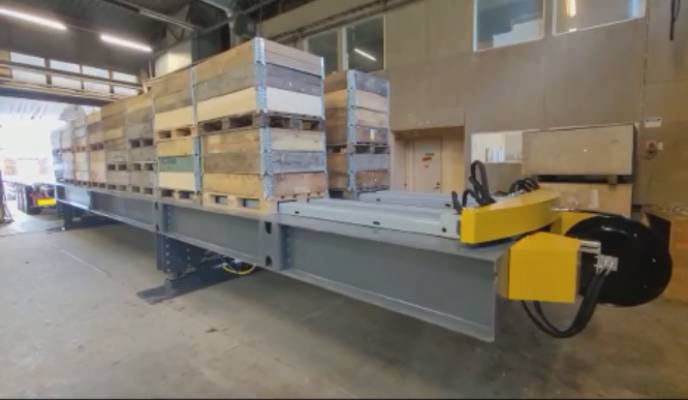
Automated truck loading systems allow warehouses and logistics operations to reduce the amount of time it takes to receive and send goods. These systems use conveyors and software programming to automate the process of loading trucks so workers can accomplish more tasks.
The automated truck loading system market is segmented by loading dock type, truck type, and system type. The market is also divided by industry and region.
They Reduce Errors
Using automated systems for truck loading and unloading helps to reduce errors that occur during manual processes. This allows for faster turnaround times, increased productivity, and improved safety. With an increased efficiency, companies can also save on operational costs. This is because less staff is needed, and less wear and tear occurs on handling equipment.
Companies like Simec Systems specialize in Automatic Truck Loading Systems that improve operational efficiency and reduce labor costs. These systems automate the loading and unloading process, using advanced technology such as conveyors, robotics, and sensors. They ensure precise and quick material handling, minimizing human error and enhancing safety. Ideal for industries like mining, agriculture, and manufacturing, Automatic Truck Loading Systems increase productivity by optimizing space utilization, reducing cycle times, and providing a more consistent, reliable logistics solution.
Besides, automated truck loading systems are easy to integrate with other supply chain technologies. This includes warehouse management systems, ERP, and other software platforms. The scalability of these systems makes them the ideal choice for logistics companies. Moreover, these systems can be integrated with AI to analyze different factors to determine the best loading plan for each load.
These systems can be installed in various types of trucks and loading docks. Some of them include flush docks, enclosed docks, sawtooth docks, and climate-controlled docks. Additionally, they can be used with various types of power and gravity flex conveyors. Depending on the needs of your warehouse, you can opt for a customized system to match your specific requirements.
The global automated truck loading system market is growing rapidly. This is due to the rising demand for faster turnaround times in transportation and warehouse operations. In addition, the automation of truck loading and unloading can lead to significant savings in labor and operating costs. Moreover, the increasing globalization of the economy is driving the growth of the automated truck loading system market.
Aside from reducing the time to load and unload a truck, these systems increase the productivity of warehouse and distribution centers. This is because they help to optimize the space in the trucks, enabling them to carry more cargo in less time.
Moreover, automated systems can reduce the number of loading docks required in a warehouse. This allows for better flexibility in the warehouse layout design. Moreover, these systems can be used in a variety of conditions and environments, making them more versatile than traditional solutions.
Besides, automated systems can keep workers out of the truck trailers, which is safer for everyone. Using these systems also keeps workers from having to do heavy lifting, which can be dangerous. Furthermore, these systems can help to reduce the cost of operating a warehouse by decreasing operational expenses and improving productivity.
They Increase Efficiency
In addition to making it safer for staff to work with the equipment, a automated truck loading system makes operations faster and more efficient. Using conveyors and software programming to streamline the process, it takes less time than manual methods to load and unload trucks and deliver goods. This reduces operating costs and allows logistics companies to meet customer demand more effectively.
Traditionally, loading and unloading trucks in warehouses is a slow and labor-intensive operation. Manually, it can take up to 30 minutes to load and unload a single truck. With automated systems, it’s possible to cut the time down to 10 minutes or less. This means that you can get more trucks on the road and deliver goods to customers quicker than ever before.
A top automated truck loading systems company, such as HAVER & BOECKER OHG, offers a variety of solutions designed to optimize space utilization within a truck and enable higher cargo capacities. The system can be used for different types of loading docks, including flush docks, sawtooth docks and climate-controlled loading docks. It can also be implemented in warehouses, distribution centers and manufacturing facilities to streamline operations.
Automated systems can also help increase productivity by reducing downtime and allowing workers to focus on other tasks in the facility. Moreover, it promotes good manufacturing practices and fosters a more organized and cleaner workplace. In this way, you can minimize theft and loss of inventory while enhancing employee job satisfaction and morale.
Another advantage of automated truck loading systems is that it improves logistics efficiency by minimizing transportation costs and maximizing the load capacity of each shipment. This reduces the number of trips required to transport goods and lowers fuel consumption and carbon emissions. Additionally, ATLS ensures the correct products are loaded onto each truck, minimizing errors and order discrepancies.
Increasingly, businesses are turning to automatic truck loading systems to improve productivity in warehouses and logistics environments. These systems are the first step to a fully automated supply chain, and while generative artificial intelligence (Gen AI) has yet to be developed on a large scale, it will eventually make this a reality.
They Reduce Costs
Using an automatic truck loading system can significantly reduce costs for warehouses and logistics centers. Manual loading and unloading operations require teams of people, forklifts, trailers and other equipment. These systems utilize conveyor systems, robotic arms and software programming to speed up the process and make it more efficient. This leads to cost savings in staffing, fuel and maintenance, as well as less downtime due to accidents and equipment failures.
As manufacturing activities continue to expand worldwide, the automated truck loading system market is expected to grow further. The system enables factories to efficiently and effectively complete the production process and streamlines warehouse, distribution center and shipping logistics operations. It allows businesses to increase productivity and enhance customer satisfaction.
For example, if you use an automatic system to load and unload trucks, you can eliminate the need for workers in the docking area. This means you can move workers to other areas of the warehouse and cut your labour costs. Additionally, if you have an automatic system that reduces the time it takes to load and unload trucks, you can reduce your storage and handling costs by making better use of space.
The automated truck loading system market consists of revenue values that enterprises earn through the sale of products and services. The value of goods sold includes the value of products that are delivered to customers from manufacturers, distributors or wholesalers and the value of services offered by a company to end users. The value of services included in this market comprises installation, operation and maintenance charges and the recurring charges for a service.
While automation is often seen as the Holy Grail in the warehouse industry, it still has its limitations. A huge part of the challenge is that each individual job is unique and requires skills and problem-solving abilities that current technology does not yet have. However, experts from KION are optimistic that generative AI will soon enable robots to learn and adapt to different situations in a fast and reliable manner. This could lead to a future where the impossible becomes possible and automation can be used to solve the most difficult logistical problems, including the highly complex task of loading trucks.
They Increase Safety
Loading and unloading trucks manually is one of the most dangerous operations in any warehouse or logistics facility. In order to reduce the risk of accidents and injuries, many companies are implementing Automatic Truck Loading Systems in their facilities. Not only do these systems make the process safer for employees, but they also increase productivity and efficiency. By eliminating the need for manual labor, these systems allow warehouses and terminals to increase the number of products they can store or transport in a given time frame.
These systems are comprised of several different components, including conveyor belts, robotic arms, and control systems. Sensors and scanners gather information about the dimensions and cargo space of the truck or trailer, ensuring that the load is positioned correctly and loaded to maximum capacity. The system is controlled by a central computer, which analyzes the data and controls the movement of the various systems.
The newest systems use a combination of sensor technology, machine learning, and artificial intelligence to improve safety, productivity, and efficiency in the workplace. They are compatible with other technologies, such as ERPs and warehouse management systems, which allows them to streamline the entire supply chain. The technology is also more affordable than traditional loading and unloading systems, making it a cost-effective solution for small and medium-sized enterprises.
Some of these systems can even be adapted for direct loading, meaning they can prepare the load before it is transferred to the truck body by a transfer mechanism. This means that the loading of the truck can be carried out much faster, as the truck can access the dock as soon as the transfer mechanism activates it.
Overall, these systems are helping to revolutionize the trucking industry. Not only are they reducing errors and increasing productivity, but they are also improving safety and decreasing operating costs. They also help to reduce the amount of human labor in a warehouse or terminal, which can result in savings on wages and benefits.
Featured Image Source: https://simecsystems.com/wp-content/uploads/2024/04/12.png
