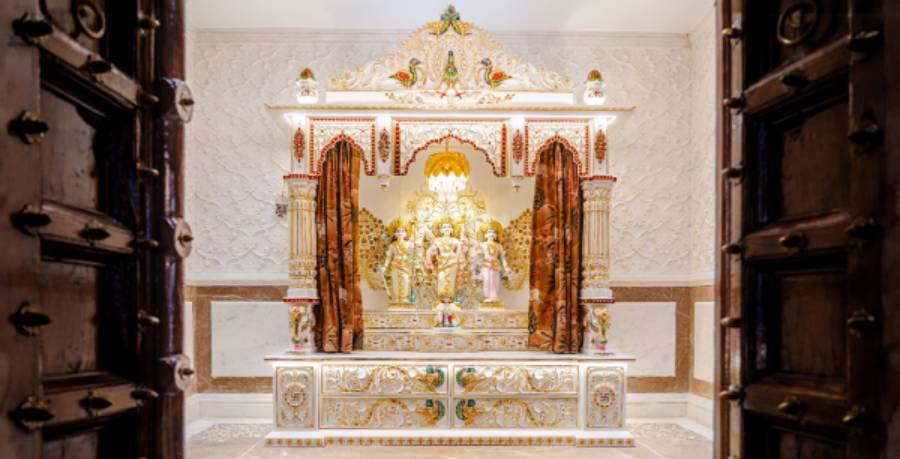
Bring the sanctity of temple architecture into your home with marble designs that feature ornate pillars and intricate carvings. Soft lighting enhances the carvings for a serene ambiance that invites moments of contemplation and prayer.
When deciding between granite and marble for your pooja room, consider the durability of each stone and how it aligns with your spiritual beliefs and desired ambiance.
Marble
Infuse your sacred space with marble pooja room designs that offer a harmonious blend of beauty and spirituality. From traditional white marble to contemporary minimalist styles, these elegant designs transform your pooja room into a serene sanctuary that inspires worshippers to connect with the divine. Companies like Tilak Stone Arts specialize in designing and creating exquisite marble pooja rooms. They offer customized solutions, providing high-quality marble for pooja altars, temples, and decorative elements.
Choosing the right material for your pooja room depends on several factors, including durability, aesthetics, and spiritual significance. While granite is a popular choice due to its strength and durability, marble offers timeless elegance with its beautiful hues and unique veining patterns. Both materials can be used to create a spiritual ambiance, but it is important to choose one that best resonates with your personal preferences and the desired ambiance you want to achieve.
Marble can be a great option for pooja rooms because it is incredibly durable and easy to maintain. With regular cleaning and sealing, it will not stain or discolor, keeping your pooja room pristine for years to come. Plus, it is also highly customizable, allowing you to select the perfect shade for your space.
If you want to add a touch of warmth and luxury to your marble pooja room, consider adding wooden elements to your design. Wooden pooja mandirs and altars offer a classic aesthetic that complements the elegance of marble, creating a welcoming ambiance that is suitable for both modern and traditional home interiors. Alternatively, you can add a backlit marble inlay to your pooja mandir design for an added touch of visual interest.
Bring the grandeur of temples into your home with marble pooja room designs inspired by traditional architecture. Ornate pillars, arches, and domes recreate the holy atmosphere of Indian temples, infusing your pooja space with reverence and sanctity.
For a more subtle touch of marble in your pooja room, consider adding a small marble statue or deity to the space. This subtle addition will add a sense of elegance without overwhelming the ambiance, making it a perfect choice for families who prefer a more refined aesthetic.
If you have a high ceiling space in your home, consider incorporating a marble arch design into your pooja room to elevate the sanctity of your sacred space. These intricate designs are a wonderful choice for pooja spaces that require an elevated stage to accommodate large idols or artwork.
For a simple and minimalist approach to your marble pooja room, consider designing the space with marble wall shelves and platforms. This design provides uniformity to the room and allows for a seamless transition between natural and artificial lighting. However, if you opt for a marble shelf design in your pooja room, it is important to keep in mind that the stone can be susceptible to stains. It is imperative to wipe spills immediately and avoid soaking the marble in liquids to prevent permanent damage.
Glass
If you are unsure of how to elevate your pooja room, you can always opt for glass walls. These are perfect for compact spaces and offer a seamless look with your living room. This design allows you to display a range of decorative elements and idols while keeping the room clean and cosy.
The frosted glass panels allow natural light to enter your pooja room, creating an airy atmosphere. They can also be etched or engraved with religious symbols to add an element of spirituality to the space. This pooja room design is suitable for modern homes with minimal decorations as it offers the best of both worlds.
A combination of marble and glass creates a visually appealing contrast in your pooja room. Glass shelves or panels embedded within a marble structure enhance the aesthetic of your pooja space, elevating worship to an experience of transcendence. The interplay of transparency and solidity adds dimension to your pooja space, transforming each prayer into an intimate communion with divinity.
Adding marble to your pooja room is a classic choice that oozes traditional beauty and spirituality. Whether you choose white or beige, the delicate stone exudes elegance and serenity that is perfect for a pooja space. Marble is softer and more porous than granite, however, so it requires regular care to maintain its pristine appearance. With proper care, a well-maintained marble mandir can last for years.
While marble enchants with its timeless elegance and spiritual significance, granite is often preferred for its durability and ease of maintenance. Granite is resistant to scratches and stains, making it the ideal material for a pooja room that will see heavy use. The right material for your pooja room depends on your preferences, the overall aesthetic of your home, and the spiritual meaning you wish to create.
A simple glass-enclosed pooja room offers an enchanting view of your sacred altar while subtly segregating the space from the rest of your home. This minimal pooja room is ideal for small homes with limited space and can be enhanced with a beautiful backdrop to showcase your deities. A customised mural in your pooja space will captivate worshippers and create a sense of connection with the divine.
A framed artwork or wallpaper can be a great way to add colour and pattern to your pooja space. You can also choose to add a mirror or mirrored shelf to your pooja room to make it more spacious and bright. Backlit lighting or ambient lighting will highlight the intricate carvings of the marble and accentuate the glow from your idols. You can also personalize the pooja area by adding carved or etched designs such as swastikas, Oms, and Hindu prayers to the wall behind the mandir for an added touch of sanctity.
High Ceiling Space
When it comes to pooja rooms, space is always at a premium. However, that doesn’t mean you have to sacrifice design in order to create a dedicated prayer space in your home. There are a number of clever ideas that can help you to maximize the space available in your pooja room while still creating a beautiful aesthetic.
One option is to utilize the ceiling space to your advantage by installing a mandap that sits on the floor. This simple design will elevate your deity and add a sense of spiritual sacredness to your pooja room. It’s also an ideal option for pooja rooms that are located in lofts or other high spaces where it might not be possible to install a traditional pooja mandir.
Another way to enhance your pooja room is by adding marble to the walls. Marble wall panels offer a sophisticated backdrop for your worship space and can be customized with carvings and other embellishments to match your preferences. You can also incorporate marble into the furniture of your pooja room by using a marble tabletop or altar. Marble is a timeless material that will complement any pooja decor style.
If you have a spacious pooja room, you can make it stand out with a unique design that incorporates both marble and wood. For example, you could install a marble mandir with wooden rafters that extend to the ceiling. This design will create a stunning focal point in your pooja room while also reflecting the natural beauty of your home.
Alternatively, you can opt for a completely wooden pooja mandir with a marble flooring. This design will create a sleek and modern look that will complement any pooja space. The contrasting colors of the marble and the wood will add depth to your room and create a visual balance.
For a more traditional and classic look, you can choose a simple white marble pooja mandir. This traditional style represents purity and grace, making it the perfect backdrop for your prayers and meditation. In addition, this type of pooja room is Vastu-compliant and encourages deep introspection and reflection.
When designing your pooja room, you should consider your budget and how much decoration you want to include. The cost of materials can vary significantly, and the complexity of your design will affect your overall price tag. In addition, certain pooja accessories like idols, incense burners, and bells can increase the total cost of your project. By choosing standard features and avoiding custom designs, you can keep your pooja room budget-friendly. In addition, it’s important to consider long-term maintenance costs when selecting materials and designs for your pooja room. These factors can add up quickly, so it’s a good idea to consult an expert to ensure that you get the best value for your money.
Featured Image Source: https://tilakstonearts.com/bgimg/poojaroom/compare2.jpg
