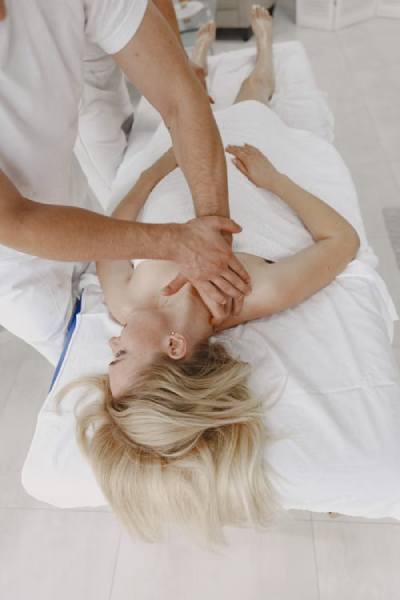
You do a hamstring stretch at your desk, roll your neck in between meetings, and follow up with a ten-minute routine before going to bed. It loosens up here and there for an hour, perhaps two, only to become stiff by the afternoon. If the cycle you’ve described is something you identify with, it’s likely time to take a fresh look at massage therapy because packed muscles haven’t taken up residence in your body by some magic stretch.
But here is the part many people miss. A muscle that stays too tight for weeks is not only short but also tight. At the tissue level, it is guarded, starved of blood flow, and often adhered to layers surrounding it. That is precisely why massage therapy works on those symptoms, and thus the results are more long-lasting compared to another set of toe touches.
Licensed massage therapists at True Health Chiropractic and Acupuncture in Lombard, IL consider tight muscles as a sign to explore, not merely a knot to rub out. It couples manual soft-tissue work with a plan for maintaining the changes you can create on the table.
What Stretching Really Does to a Tight Muscle
A stretch takes the muscle to its end range and asks the nervous system to deal with that length. If you hold it long enough, tension in the nervous system begins to dissipate a bit, which is part of why you feel looser immediately afterwards. The muscle has not changed that much. The majority of the short-term gain is actually from your brain accepting the position better, not from the tissue becoming longer.
And that distinction matters a little more than it might seem. And if the tightness originates from the nervous system protecting an irritated joint, or from layers of fascia that are no longer gliding over each other, then pulling on the muscle does not address the reason it tightened in the first place. You are getting rid of the alarm, not the flame. The alarm silences for a spell, only to ring again by lunchtime.
The Reason Muscles Tense Up
Muscles rarely tighten at random. They tighten to protect something. If your shoulder is constantly rotated forward like this, your upper trapezius will work much more than it should throughout the day. Your low back is compensating with every step for a hip that lost motion months ago. Whether you pick up on it or not, your brain is wired to sense irritation or instability and brace the region for hours at a time.
That brace refines itself into a thing, and over time that bracing alters the tissue. Blood floods the area, small adhesions form between muscle and fascia, and trigger points develop in the overworked fibers. Stretching doesn’t do much for any of those. Never mind how much you stretch a tight muscle; as soon as you get off the mat, your brain is going to pull it back short.
And this is where massage therapy works what stretching cannot reach.
A Stretch Cannot Do What Skilled Hands Can Do
Direct pressure releases trigger points: irritable spots with very tight muscle that hold a muscle in low-grade contraction all day and refer pain to various areas.
It is at this intersection that myofascial release can bring the tissue layers back into glide, so that the muscle moves freely rather than dragging its neighbors along with it.
Things like deep tissue work, through increased local blood flow in the area, bring oxygen back to fibers that had been running on fumes for months.
Slow, intentional touch grounds the nervous system and reduces the alert signal that triggered the entire cycle.
A stretch applies one force anti-parallel. An educated therapist reads the tissue, identifies the restriction, and shoves it at the precise angle and depth that is needed. That is a practical difference between the two that makes it clear why one good session can often achieve what a month of daily stretching never could.
Massage Therapy Techniques for Those with Stiff Neck Muscles
Not every technique fits every problem. Deep tissue massage is only suitable for the deep, chronically overworked areas such as your upper back and hips. Unlike deep tissue massage, in which constant pressure is applied to a certain area, cupping therapy acts by drawing and decompressing tissue. Active release techniques incorporate pressure and movement; that is, the muscle slides under the therapist’s contact, and the joint goes through its range.
And this is where assisted stretching comes in, which, after everything above, may sound contradictory. The difference is context. Only after the tissues have been released do therapists actively stretch the tissue, and at that point the added length actually stays rather than going back overnight.
When Stretching Is Still Part of Your Routine
All of this doesn’t make stretching irrelevant or useless. You already have motion, and it flows you into a good feeling; on a stressful day, that counts for something! Athletes need a touch of regular mobility work, and desk jockeys two minutes every hour of whatever movement they can muster.
Here’s the most honest way to frame it. Stretching maintains. Massage therapy changes. For someone whose body is already moving well, stretching is what keeps it that way. If a tight muscle has not responded over months, you require something that changes both the tissue and the underlying signal, and that is what hands-on treatment does.
What Happens During a Medical Massage Therapy Session
Muscle relief massage therapy sessions start with questions, not oil. The therapist asks you where the tension lives, what aggravates it, and what steps have already been taken at home. Then treatment focuses on the areas that are driving the issue, which can be one joint away from where you’re feeling it. You might leave mildly sore (like after a good workout), and most people find it easier to move 24 – 48 hours post-treatment.
Expect a plan as well. An effective therapist will tell you that chronic tension typically requires a short series of visits rather than a single silver-bullet repair, and will explain exactly what to expect in the upcoming sessions instead of peddling an indefinite package.
Wrapping Up
When the stress continues to come out on top, residents from Lombard, Villa Park, Glen Ellyn, and the surrounding neighborhoods around Yorktown Center choose True Health Chiropractic and Acupuncture. With over 10 years of experience, licensed massage therapist Stephanie Gonzalez shapes each session around what your tissue actually requires rather than a predetermined routine. Call 630-796-2083 or book online at my-truehealth. com and give those overworked muscles the fix that a stretch never could.
